
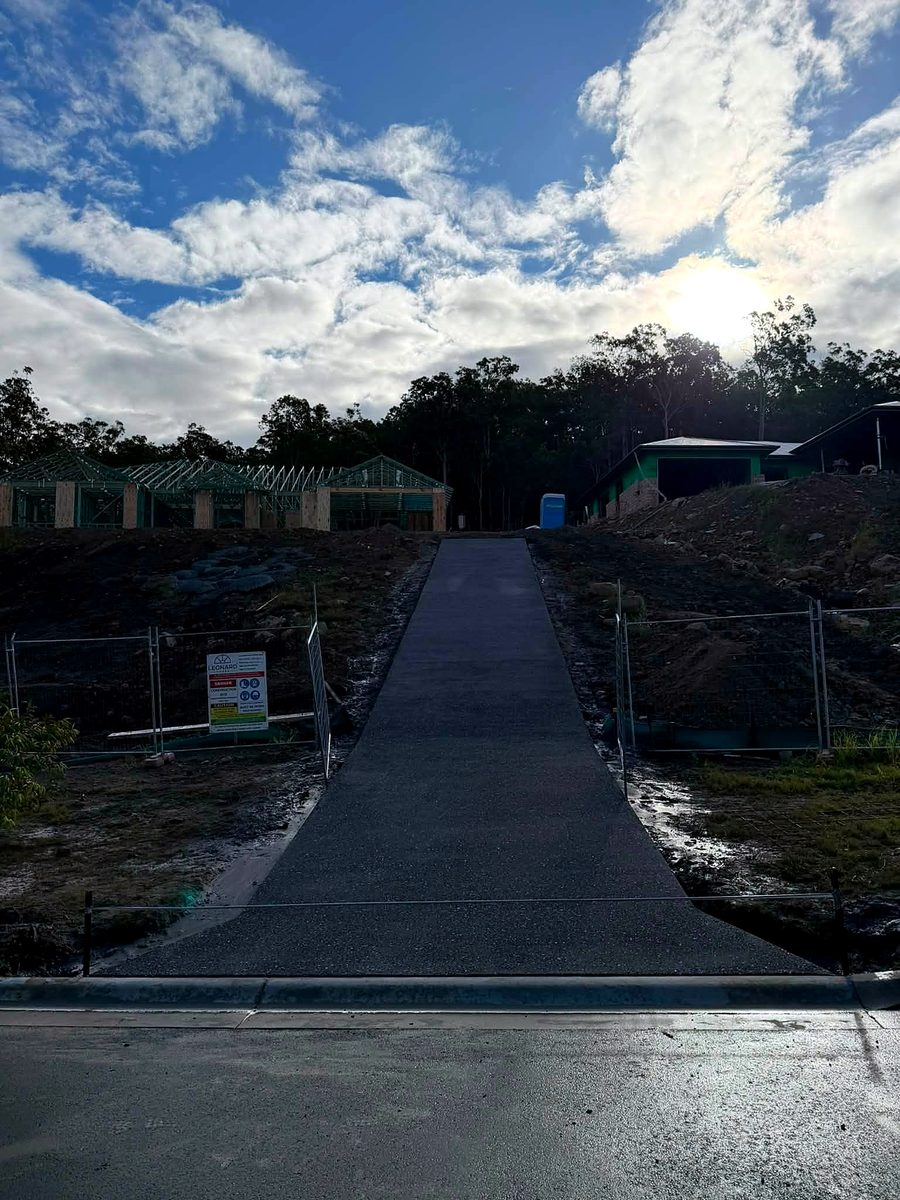
Concrete is hard enough to walk on in a day and strong enough for cars in a week, but it does not reach its design strength for about four weeks. Here is how to treat a new driveway so it looks the same in ten years.
The timeline
- 24 to 48 hours: foot traffic is fine. Keep bikes, wheelbarrows and pets off the surface.
- 7 days: cars and light utes can park on it. Avoid turning the wheels while stationary.
- 28 days: full design strength. Only now should delivery trucks, skip bins or caravans go on it, and even then keep them off the edges.
Curing is not the same as drying
Concrete gains strength by a chemical reaction with water, not by drying out. In Queensland heat a slab can dry on the surface before it has cured properly, which leads to a weak, dusty top and surface cracks. We apply a curing compound or keep the surface damp after the pour; your job is simply to keep it clean and avoid heavy loads.
Hairline cracks and control joints
All concrete shrinks slightly as it cures. The saw cuts or tooled joints you see across the driveway are there to decide where that shrinkage shows up. A fine hairline crack along or near a joint is normal; a wide, stepped or spreading crack is not, and you should call us.
Looking after it
- Hose off oil, fertiliser and leaf stains as they happen.
- Wait at least 28 days before sealing, and use a breathable sealer designed for driveways.
- Keep skip bins and heavy vehicles off the edges for good; edges are the weak point of any slab.
We tell every customer the exact timing for their pour on the day, because mix, weather and thickness all shift it a little.
Reece Montague is a QBCC licensed concreter (QBCC licence 15593005) and the founder of OnlyCrete Concreting Pty Ltd. He has poured house slabs, footings and driveways across the Gold Coast, Brisbane, Logan and Ipswich for more than ten years. About Reece.